“excerpt in progress”
February 8, 2026


Carnaval 2026 
Exhibicion de Trajes (costume exibition) Taimascaro Diablos Tradiccionales 
Taimascara’s head ornament is lifted onto his head. This particular piece of art shows a member of the,”Taino” tribe. 
The Spanish are represented in the costume by a blouse and cape. Taíno pictographs are painted on to decorate the clothes. 
The actual mask represents Taíno figures and deities from Taino mythology. The Island Arawak-speaking mythology was recorded in communal sacred performances called areitos. Sadly, this form of record keeping has been lost. 
Taino religious practice was centered on veneration of zemis (a deity or ancestral spirit housed in a sculptural object), ancestors, and mythic heroes. There was no distinction between the natural and supernatural. 
Perhaps sculptural objects representing the type of ZEMIS that would have housed ancestral spirits. 
ZEMIS could also be the spirits of ancestors and were highly honoured. Bones or skulls might be incorporated into the sculpture which would then be housed in a shrine and given offerings ie food. ![ZEMIS were sculpted from: bone, clay, wood, shell, sandstone, and stone. Taíno people possibly hid their ceremonial objects in caves or destroyed them so that they would not fall into Spanish hands.[10]](https://i0.wp.com/millermc1958.com/wp-content/uploads/2026/04/1_g-2.jpeg?resize=1388%2C2266&ssl=1)
ZEMIS were sculpted from: bone, clay, wood, shell, sandstone, and stone. Taíno people possibly hid their ceremonial objects in caves or destroyed them so that they would not fall into Spanish hands. 
The Taimáscaro costume focuses on using natural elements with recycled craftsmanship as the primary consideration. 
Shells seen on the pants of this costume are common on the pants and shirts of the Taimáscaro costume. 
Shells seen on this mask are natural elements taken from the north coast of the island and could possibly be symbolizing mermaids. 
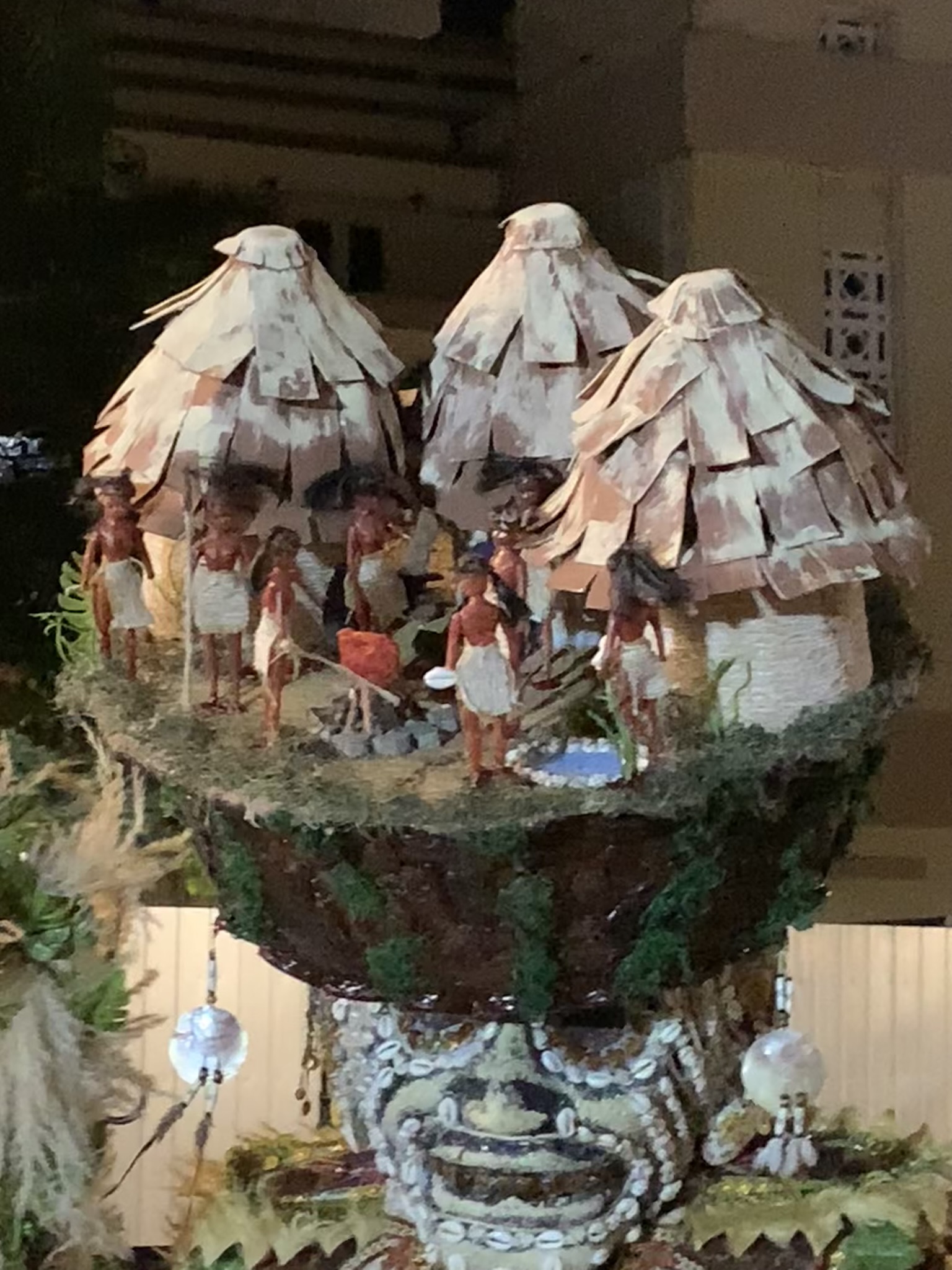
Taino members of the general population lived in circular buildings like the ones shown in this diorama. Poles provided primary support and were covered with woven straw and palm leaves. The design was very similar to that of the North American teepees. 
Carnaval 2026
The Spaniards, during the 15th century, brought with them a tradition, Carnaval Dominicano. This tradition has evolved into the modern day Carnaval that is celebrated each year.
Thirty-five years ago a group of artists created a carnaval character specific to Puerto Plata, The Taimáscaro. The goal was to blend the main features of three cultures: white Europeans, black Africans and aborigines demonstrating a frank union of the three races. The character’s name, “Taimascara” was created by blending,”Taino” (the first settlers) with “máscara” (mask).
The character represents the characteristics of the province of Puerto Plata. Of the many creative and beautiful representations of, “Taimascara” at this year’s Exibicion de Trajers this “tribe” was my favourite!
(Taimascaros Essence of What We Are)
October 17, 2024

2025_Carnaval! 
Press Conference announcing the 500th!!! year of the Puerto Plata Carnaval! 
Carnaval opens with El Diablo CojuiloDiablo Cojuelo (limping devil)….so mischievious he was pushed down to earth…the Los Lechones de Imbert were the first of ten groups portraying El Diablo Cojuelo 
Fourteen different, “tribes” (groups) represent the Taimáscaro this year. 
This Carnaval character was created in 1991 by a group of young people in Puerto Plata. They wanted to represent the three cultures in the Dominican Republic: the Taino, the Spanish, and the African. 
The word, “Taimáscaro” is made of two words, Taino (ancestral inhabitants of the Caribbean islands, believed to have migrated from the mouth of the Orinoco River in South America. In the Dominican Republic they settled at a set of 27 waterfalls known as the Damajagua Waterfalls,) and the word, “mascaero” (mask). 
The, “Taimáscaro” costume consists of: • snail shells collected from the coast of the Atlantic and attached to a tight pair of pants symbolizing mermaids • Taíno pictographs painted on a Spanish blouse and cape • a belt alluding to the Taíno culture • coloured scarves tied to the arms, representing African religiosity • a mask represented by Taíno figures and deities Can you see the individual parts of the costumes in each photo?
The Spaniards, during the 15th century, brought with them a tradition, Carnaval Dominicano. This tradition has evolved into the modern day Carnaval that is celebrated each year starting on February xx, ending on the first Sunday in March .
Originally, elaborate costumes were made reflecting how the Indigenous Peoples and Africans perceived the colonial masters. Over time, a Dominican version of the history and folklore of the country’s thirty-one provinces as told by characters based on the mixing of these three groups evolved. Here’s hoping I get to Carnaval next year to take my own photos!
Leave a Reply